
Diesel Technician Pay Compared to Other Trades
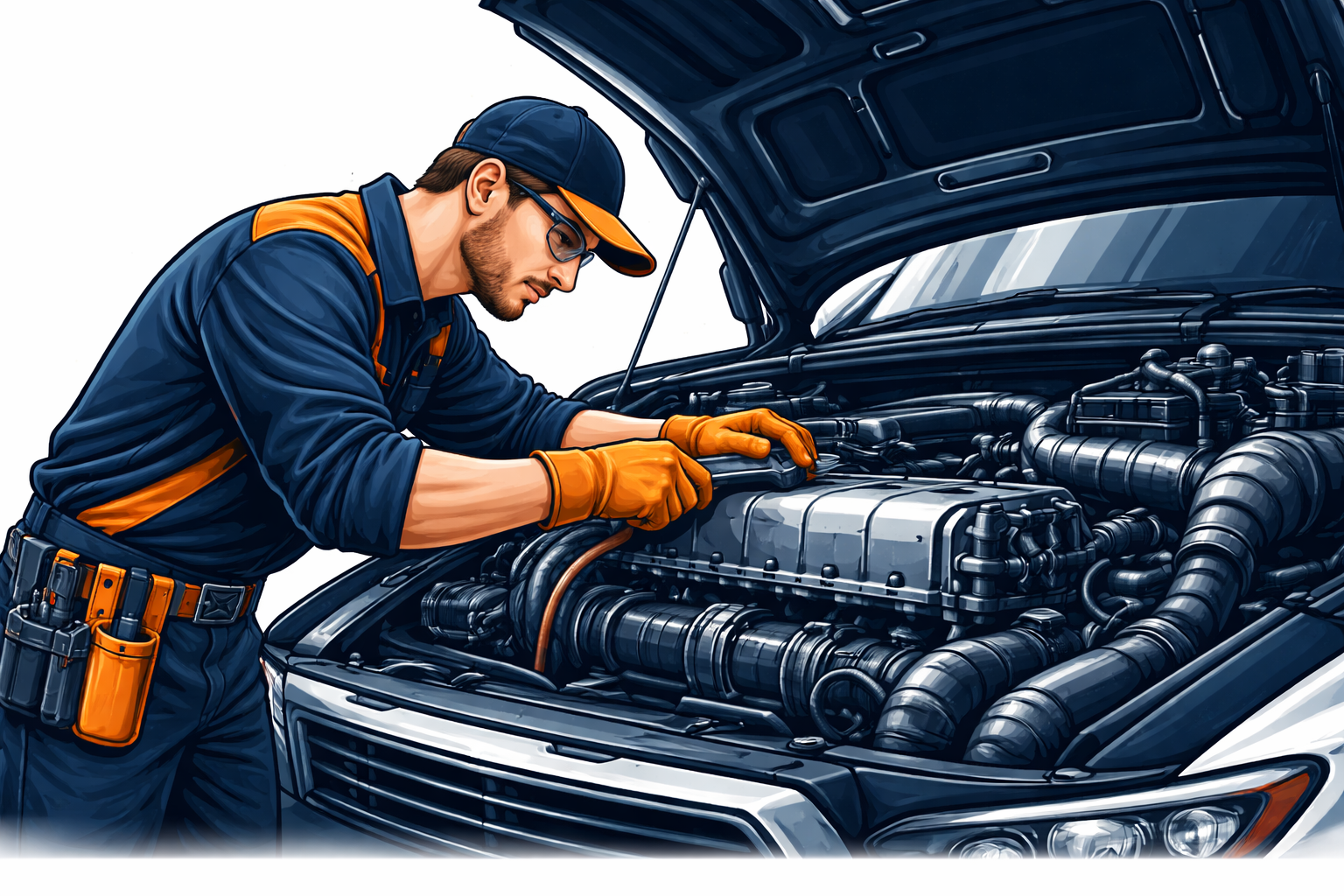
Everything in America moves by diesel. The trucks delivering your groceries. The buses carrying your kids. The construction equipment building your roads. The generators keeping hospitals running when the power goes out.
And someone has to keep all of it running. That someone is a diesel technician. And they're in massive demand.
This guide breaks down real diesel technician salaries in 2026 so you know exactly what to expect - and how to maximize your earnings.
How This Compares to Other Skilled Trades
Pay is the first thing most people weigh when they are choosing a trade, and it is hard to weigh it without seeing the trades side by side. These are median annual wages from the Bureau of Labor Statistics Occupational Outlook Handbook, May 2025, which is the most recent national data available.
| Trade | Median annual wage |
|---|---|
| Electrical power-line installers | $95,320 |
| Tool and die makers | $64,050 |
| Plumbers, pipefitters, steamfitters | $63,800 |
| Electricians | $63,190 |
| Diesel service technicians | $61,770 |
| HVACR mechanics and installers | $61,010 |
| Machinists | $58,750 |
| Welders, cutters, solderers, brazers | $53,750 |
| Automotive service technicians | $50,620 |
Read that table carefully, because the median is not the whole story. It is the middle of the range, which means half of every trade on this list earns more than the number shown. The gap between the median and what a strong tradesperson actually earns is wider in some trades than others, and it is especially wide anywhere the pay is tied to production rather than the clock.
Diesel sits meaningfully above automotive. The BLS median for diesel service technicians is $61,770 against $50,620 for automotive service technicians, a gap of roughly $11,000 a year at the middle of each trade. That gap is the main financial argument for going diesel, and it is why a lot of auto technicians cross over.
If you are already turning wrenches and weighing the move, APEX Tech Nation has a diesel technician training guide covering OEM programs and the ASE T-series tests, plus its own diesel pay breakdown written for working techs.
Diesel Technician Salary Overview
Here are the verified numbers for 2026:
- Entry-level (0-2 years): $38,000 to $48,000 per year
- Mid-level (3-5 years): $50,000 to $65,000 per year
- Experienced (5-10 years): $62,000 to $78,000 per year
- Senior / Master (10+ years): $75,000 to $90,000+ per year
National median: approximately $58,000 per year or about $28 per hour according to the Bureau of Labor Statistics.
But the median doesn't tell the full story. Diesel techs who specialize, get certified, and work for the right employers regularly earn $75,000 to $95,000+. Fleet technicians at major trucking companies, dealership diesel techs, and mobile diesel techs can all push past $80,000.
Add overtime - and diesel techs get plenty of it - and six figures is realistic for experienced techs.
Why Diesel Pays Well
Three reasons:
1. Everything runs on diesel. Trucks, buses, construction equipment, marine engines, generators, agricultural equipment, locomotives. The diesel fleet is enormous and growing.
2. Not enough techs. The technician shortage hitting automotive is even worse in diesel. Fewer people train for diesel specifically, but the demand is just as high.
3. Downtime is expensive. When a truck is broken, it's not making money. A fleet with 100 trucks losing $1,000 per day per truck in revenue can't afford to wait. They pay diesel techs well because fast repairs save them a fortune.
Salary by Experience Level
Entry-Level Diesel Technician (0-2 Years)
$18 to $23 per hour / $38,000 to $48,000 per year
You're learning the trade. Oil changes, brake jobs, basic inspections, tire work, and preventive maintenance. You'll work under experienced techs who teach you the harder stuff.
Raises come fast in diesel. Most employers bump your pay every 6-12 months as you prove yourself. The learning curve is steep but the pay curve follows.
Mid-Level Diesel Technician (3-5 Years)
$24 to $31 per hour / $50,000 to $65,000 per year
You're handling most repairs independently. Engine diagnostics, fuel systems, electrical troubleshooting, transmission work, aftertreatment systems. This is where your earning potential starts accelerating.
Getting ASE diesel certifications at this stage makes a big difference. Certified techs command higher pay because employers trust them with complex jobs.
Experienced Diesel Technician (5-10 Years)
$30 to $38 per hour / $62,000 to $78,000 per year
You're the tech other techs come to with tough problems. Complex diagnostics, engine overhauls, advanced electrical issues, emissions system repairs. At this level you're highly valuable to any employer.
Senior / Master Diesel Technician (10+ Years)
$36 to $45 per hour / $75,000 to $90,000+ per year
Master diesel techs handle the most complex work. You're mentoring junior techs, managing difficult diagnostics, and often choosing your own jobs. Senior diesel techs at dealerships and major fleets regularly earn $80,000 to $95,000+.
Salary by Employer Type
Where you work matters as much as your experience.
Trucking Company / Fleet Operations
$55,000 to $80,000
Working for companies like FedEx, UPS, Schneider, Werner, or Penske. You maintain a fleet of trucks. The work is steady, benefits are usually excellent, and the pay is competitive.
Pros: Consistent work, good benefits, structured environment, overtime available Cons: Can be repetitive, may work nights or weekends to keep trucks running
Dealership (Truck Manufacturer)
$50,000 to $85,000
Working at a dealership for Peterbilt, Kenworth, Freightliner, Mack, Volvo, or International. You work on that brand's trucks specifically.
Pros: Manufacturer training, latest diagnostic tools, structured pay plans, career advancement Cons: Warranty work can pay less, flat rate pressure at some dealers
Independent Diesel Shop
$45,000 to $70,000
Working at a privately owned diesel repair shop. You see all makes and models.
Pros: Variety of work, often more relaxed atmosphere, flexible schedule Cons: Pay ceiling is usually lower, benefits vary widely, equipment quality varies
Mobile Diesel Technician
$60,000 to $90,000+
You drive a service truck to broken-down equipment wherever it is - on the highway, at a construction site, at a farm. You work alone and handle everything.
Pros: Independence, highest pay potential for employed techs, high demand Cons: You're on call (breakdowns don't happen on a schedule), working in all weather conditions, need extensive tools and experience
Government / Municipal
$50,000 to $70,000
Working for a city, county, state, or federal agency maintaining buses, fire trucks, garbage trucks, snow plows, and other government vehicles.
Pros: Best job security, best benefits (pension, health insurance), regular hours, rarely on call Cons: Lower pay ceiling, slower advancement, less exciting work
Self-Employed / Mobile Business Owner
$80,000 to $150,000+
Running your own mobile diesel repair business. You set your own rates and choose your customers.
Pros: Highest earning potential, complete independence, build equity in a business Cons: You cover your own truck, tools, insurance, and benefits. Inconsistent income early on. Must manage the business side too.
Salary by Specialty
Specializing in a high-demand area pushes your pay up significantly.
On-Highway (Class 8 Trucks)
$55,000 to $80,000
Over-the-road semi trucks. This is the largest segment of diesel work. Engines, transmissions, aftertreatment systems, air brakes, electrical.
Heavy Construction Equipment
$58,000 to $85,000
Excavators, bulldozers, loaders, cranes, backhoes. Construction equipment techs work on massive machines. The work is physically demanding but pays well. Caterpillar, John Deere, Komatsu, and Volvo are the big names.
Power Generation / Generators
$55,000 to $78,000
Maintaining and repairing diesel generators used for backup power in hospitals, data centers, and commercial buildings. Critical systems mean premium pay for reliable techs.
Marine Diesel
$55,000 to $85,000
Working on boat and ship engines. Concentrated in coastal areas and near major waterways. Specialized knowledge commands higher pay.
Agricultural Equipment
$48,000 to $72,000
Tractors, combines, sprayers, and other farming equipment. Seasonal peaks during planting and harvest create heavy overtime. John Deere and Case IH dealerships hire the most techs in this space.
Emergency Vehicle / Fire Apparatus
$55,000 to $78,000
Maintaining fire trucks, ambulances, and other emergency vehicles. Often government positions with excellent benefits and job security.
Diesel Performance / Custom
$50,000 to $80,000
Working on performance modifications - turbo upgrades, tuning, exhaust systems, suspension lifts. This is the fun side of diesel. The pay varies but the work is rewarding for enthusiasts.
Diesel vs Automotive Technician Pay
People often compare these two careers. Here's the honest comparison:
Diesel technician:
- National median: $58,000
- Experienced: $70,000 to $90,000+
- Overtime: Very common, adds $5,000 to $15,000/year
- Tool investment: Lower (fewer specialty tools needed early on)
- Physical demand: Higher (bigger, heavier components)
- Work environment: Often outdoors or in large shops
Automotive technician:
- National median: $50,620
- Top dealership techs: $80,000 to $100,000+
- Overtime: Less common, flat rate structure instead
- Tool investment: Higher ($30,000 to $60,000+ over career)
- Physical demand: Moderate
- Work environment: Indoor shop
Bottom line: Diesel pays higher on average. Automotive has a higher ceiling for the top flat-rate techs at busy dealerships. Both are strong career choices.
For the full automotive salary breakdown, see our automotive technician salary guide.
Diesel Certifications That Boost Your Pay
ASE Diesel Certifications
The ASE offers specific diesel certifications:
- T1 - Gasoline Engines (medium/heavy truck)
- T2 - Diesel Engines
- T3 - Drive Train
- T4 - Brakes
- T5 - Suspension and Steering
- T6 - Electrical/Electronic Systems
- T7 - HVAC
- T8 - Preventive Maintenance Inspection
ASE Master Medium/Heavy Truck Technician: Pass T2 through T8 and you earn this title. It's the diesel equivalent of ASE Master Automotive Technician.
Pay impact: ASE-certified diesel techs earn $3 to $8 more per hour than non-certified techs. That's $6,000 to $16,000 more per year.
Cost: About $40 registration + $47 per test. Under $400 for all 7 tests. Many employers pay for it.
EPA Certifications
If you work with refrigerants (truck AC systems), you need EPA 608 certification. Quick and cheap to get.
Manufacturer Certifications
Major truck manufacturers offer their own training and certification programs:
- Cummins
- Detroit Diesel
- Caterpillar
- Paccar (Peterbilt/Kenworth)
- Volvo/Mack
- International/Navistar
Manufacturer certifications increase your value to dealerships and fleet operations that run those brands.
How to Become a Diesel Technician
Path 1: Diesel Technology Program
Length: 6 months to 2 years Cost: $5,000 to $20,000
Community colleges and trade schools offer diesel technology programs. You learn diesel engines, fuel systems, electrical, brakes, AC, and diagnostics. Many programs include ASE test prep.
Look for programs with hands-on shop time on real diesel engines - not just classroom instruction. The best programs have partnerships with trucking companies and dealerships for job placement.
For help choosing a program, read our vocational training institute guide. For the diesel-specific path, including OEM programs and which ASE T-series tests matter, the Nation has a full diesel technician training guide.
Path 2: Entry-Level Shop Position
Many diesel shops hire entry-level helpers or lube techs with no experience. You start by doing basic maintenance - oil changes, filter replacements, tire work - and learn from experienced techs.
This is a great option if you can't afford trade school. You earn money from day one while building skills. Many shops promote from within and pay for training and certifications as you progress.
Path 3: Military Diesel Training
All military branches train diesel technicians. Army, Navy, Marines, Air Force, and Coast Guard all maintain large diesel fleets. Military diesel training transfers directly to civilian careers and is highly valued by employers.
If you served and worked on military vehicles, you have a significant advantage in the civilian diesel job market.
Path 4: Crossover from Automotive
If you're already an automotive technician, crossing over to diesel is straightforward. Many skills transfer directly - diagnostics, electrical, brakes, AC. You'll need to learn diesel-specific systems (aftertreatment, air brakes, heavy-duty drivetrains) but the foundation is there.
The diagnostic skills you build working on cars translate directly to diesel work. Techs who've sharpened their diagnostic thinking with tools like APEX Tech Nation's free courses find the crossover even smoother - the systematic approach to troubleshooting is the same whether you're working on a Honda Civic or a Peterbilt 579.
Overtime: The Diesel Pay Boost
Overtime is where diesel techs really separate from other trades. Diesel work is 24/7. Trucks break down at night, on weekends, and on holidays. Someone has to fix them.
Typical overtime opportunities:
- Nights and weekends at fleet operations
- Emergency roadside calls for mobile techs
- Seasonal peaks (harvest season for ag, holiday shipping for trucking)
- Storm response for generator techs
At $28/hour base, overtime pays $42/hour. Working 10 extra hours per week for even half the year adds $10,920 to your annual income.
Many fleet operations offer scheduled overtime - you know in advance you'll work 50 or 55 hours per week. The extra hours are built into the job and the paycheck.
The Diesel Technician Shortage
The shortage of diesel techs is even more acute than the automotive shortage. Here's why:
- Fewer training programs specifically for diesel compared to automotive
- Aging workforce - the average diesel tech is getting older every year
- Growing fleet size - more trucks, buses, and equipment on the road means more maintenance needed
- Emissions complexity - modern diesel aftertreatment systems (DPF, DEF, SCR, EGR) require specialized knowledge that older techs often lack
What this means for you:
- Job security is bulletproof - diesel techs will be in demand for decades
- You have leverage - employers compete for good diesel techs
- Sign-on bonuses of $2,000 to $5,000 are becoming common
- You can be selective about where you work and what you earn
Tips to Earn More as a Diesel Technician
1. Get ASE certified. Every certification increases your hourly rate. Aim for ASE Master Medium/Heavy Truck status. See our complete ASE certification guide.
2. Get manufacturer certified. Cummins, Detroit Diesel, or Caterpillar certifications make you more valuable to dealers and fleets that run those brands.
3. Learn diagnostics. The highest-paid diesel techs are diagnosticians, not parts swappers. Understanding electrical systems, data analysis, and aftertreatment diagnostics is where the money is. Sharpen your diagnostic thinking with APEX Tech Nation - the troubleshooting approach works across both automotive and diesel platforms.
4. Go mobile. Mobile diesel techs earn more because they bring the shop to the customer. It requires more experience and a bigger tool investment but the pay ceiling is higher.
5. Work for a fleet. Major fleets like FedEx, UPS, Penske, and Ryder pay well and offer excellent benefits. The work is steady and the overtime is available.
6. Consider specializing. Heavy construction equipment, marine diesel, or power generation techs can earn more than general truck techs because fewer people have the specialized knowledge.
7. Work toward ownership. A mobile diesel repair business can earn $100,000 to $150,000+ per year. Start building your customer base and reputation while you're employed. Launch your own business when you're ready.
Diesel Technology Is Getting More Complex
Modern diesel isn't your grandfather's diesel engine. Today's systems include:
- Electronic engine management - computer-controlled fuel injection, variable geometry turbos
- Aftertreatment systems - DPF (Diesel Particulate Filter), DEF (Diesel Exhaust Fluid), SCR (Selective Catalytic Reduction), EGR (Exhaust Gas Recirculation)
- Advanced diagnostics - OEM scan tools, data logging, fault code interpretation
- Telematics - remote monitoring and predictive maintenance
- Hybrid diesel-electric systems - emerging technology in buses and delivery trucks
The techs who understand these technologies earn the most. The ones who can only do mechanical work get left behind.
This is where training matters. Whether it's manufacturer courses, ASE prep, or AI-powered diagnostic training through platforms like APEX Tech Nation, staying current with technology is the single biggest factor in your long-term earning potential.
Frequently Asked Questions
How long does it take to become a diesel technician? A trade school program takes 6 months to 2 years. You can also start as an entry-level helper with no training and learn on the job. Most techs are fully competent in 3-5 years.
Is diesel better than automotive? Diesel pays higher on average and has more overtime. Automotive has a higher ceiling for top flat-rate techs. Diesel is more physical. Both are excellent career choices. See our automotive technician salary guide for comparison.
Do diesel techs need a CDL? Not usually. But having a CDL allows you to road test trucks after repairs, which makes you more valuable. Some fleet positions prefer or require it. See our CDL training cost guide.
Can I switch from automotive to diesel? Yes. Many skills transfer directly. You'll need to learn diesel-specific systems but the diagnostic fundamentals are the same.
Is diesel going away because of electric trucks? No. Electric trucks are growing but diesel will dominate commercial transportation for decades. The existing diesel fleet is massive and requires maintenance regardless of what new trucks are sold. Diesel techs will be in demand for 30+ years.
What's the best company to work for as a diesel tech? FedEx, UPS, Penske, Ryder, and major truck dealerships (Peterbilt, Kenworth, Freightliner) consistently offer the best pay and benefits. Government positions offer the best job security and work-life balance.
How physical is diesel work? More physical than automotive. You're working on bigger, heavier components. Lifting 50+ pounds is common. Working outdoors in all weather if you're mobile. Good physical fitness matters.
What to Do Right Now
- Search for diesel technology programs at your local community college or trade school. Compare costs and job placement rates. Read our vocational training institute guide for help choosing.
- Look for entry-level diesel positions at trucking companies, dealerships, and fleet operations in your area. Many hire with no experience and train on the job.
- If you're already an automotive tech, consider crossing over. Your diagnostic skills transfer. The pay is often higher. Learn the diesel-specific systems and you'll be earning more within a year.
- Get your ASE diesel certifications. Start with T2 (Diesel Engines) and T4 (Brakes). Build toward Master status. See our ASE certification guide.
- Build your diagnostic skills. The highest-paid diesel techs are diagnosticians. APEX Tech Nation's free courses cover systematic diagnostic thinking that applies across both automotive and diesel platforms.
- Compare your options with our highest paying trade jobs guide and HVAC salary guide.
Diesel keeps the world moving. The trucks, the buses, the equipment, the generators - none of it runs without diesel techs. The pay is strong. The demand is real. And the shortage means you'll never struggle to find work. If you want a career built on something the world can't live without, diesel is it.
Level up with APEX Tech Nation - AI diagnostics, ASE prep, and a full set of free training courses. Built by a Tech. For Techs. 🔧
Already Working as a Tech?
APEX Tech Nation has free AI diagnostics, 400+ technical training articles, ASE practice tests, and a weekly industry report. Built by a 25-year ASE Master Tech.