
Electrician Salary in 2026: How Much Do Electricians Really Make?
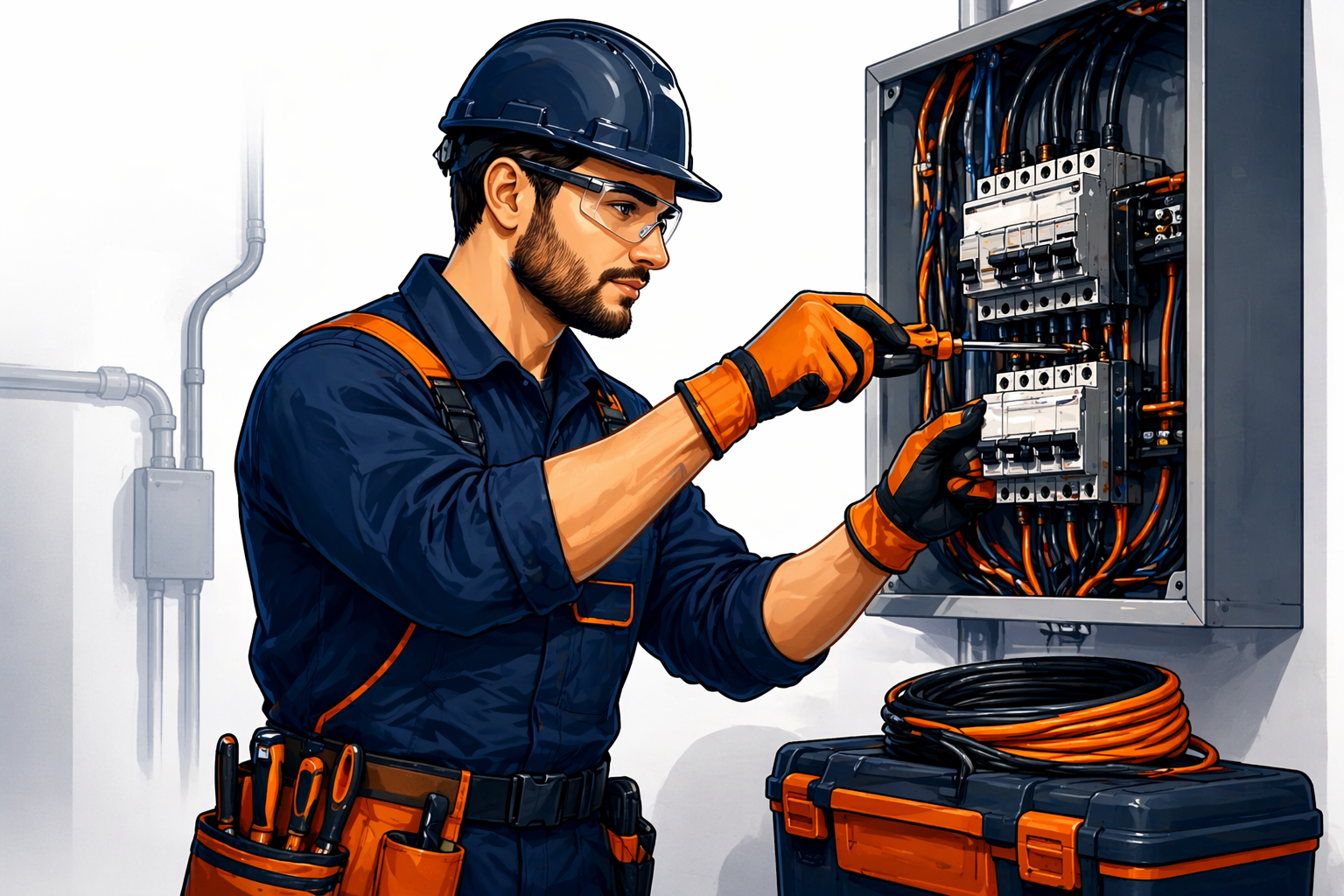
Every building needs electricity. Every home. Every business. Every hospital. Every factory. And with electric vehicles, solar panels, and smart buildings exploding in demand, electricians have never been more valuable.
So how much do electricians actually make? More than most people think. And the top earners are pulling well into six figures.
This guide breaks down real electrician salary data for 2026 so you know what to expect at every stage of the career.
Electrician Salary Overview
Here are the verified numbers for 2026:
- Apprentice (Year 1-2): $34,000 to $45,000 per year
- Journeyman (Year 3-7): $55,000 to $75,000 per year
- Experienced Journeyman (Year 7-12): $70,000 to $90,000 per year
- Master Electrician (12+ years): $80,000 to $120,000+ per year
National median: approximately $63,190 per year according to the Bureau of Labor Statistics.
But the top end is where it gets exciting. The top 10% of electricians earn over $99,000 per year. Industrial electricians, electrical linemen, and master electricians who own their own businesses regularly earn $100,000 to $150,000+.
The Bureau of Labor Statistics projects 9% job growth for electricians through 2035 - faster than average. And that number doesn't account for the massive wave of retirements happening right now. The real-world demand for qualified electricians is significantly higher than the projections suggest.
Salary by Experience Level
Apprentice Electrician (Year 1-2)
$16 to $22 per hour / $34,000 to $45,000 per year
As an apprentice, you're learning under a licensed journeyman. You'll pull wire, install boxes and conduit, assist with rough-ins, and start learning the National Electrical Code (NEC).
Apprentice pay increases on a set schedule - usually every 6 to 12 months. Most programs bump your pay as you complete classroom hours and demonstrate competency on the job. By year 4-5, you're earning 80-90% of journeyman wages.
For a complete breakdown of how to get started, read our electrician apprenticeship guide.
Journeyman Electrician (Year 3-7)
$26 to $36 per hour / $55,000 to $75,000 per year
You've passed your journeyman exam and hold your license. You work independently, lead projects, pull permits (in some states), and handle complex electrical installations and repairs.
This is the biggest pay jump in the career. Going from apprentice to journeyman typically means a $15,000 to $25,000 annual increase. You're now a fully licensed professional.
Experienced Journeyman (Year 7-12)
$34 to $43 per hour / $70,000 to $90,000 per year
You're fast, efficient, and can handle anything. Complex commercial systems, industrial controls, troubleshooting problems other electricians can't figure out. You might lead crews, train apprentices, or specialize in a high-demand area.
Experienced journeymen at union shops in major cities regularly earn $80,000 to $95,000 before overtime. Add overtime and you're pushing six figures.
Master Electrician (12+ Years)
$38 to $58 per hour / $80,000 to $120,000+ per year
The master electrician license is the highest credential in the trade. It requires passing a rigorous exam that tests deep knowledge of the NEC, electrical theory, and system design.
Master electricians can:
- Pull permits independently
- Design electrical systems
- Own and operate an electrical contracting business
- Supervise journeymen and apprentices
- Bid on commercial and government contracts
Master electricians who own their own businesses regularly earn $120,000 to $200,000+. The master license is the gateway to the highest earning potential.
Salary by State
Electrician pay varies significantly by location. States with higher cost of living, strong unions, and extreme weather (more construction activity) tend to pay more.
Highest paying states for electricians:
- Illinois: $82,000 to $98,000 (strong IBEW presence)
- New York: $78,000 to $95,000
- Alaska: $78,000 to $92,000
- Hawaii: $75,000 to $88,000
- New Jersey: $74,000 to $88,000
- Massachusetts: $73,000 to $87,000
- Oregon: $72,000 to $85,000
- California: $70,000 to $88,000
- Washington: $70,000 to $85,000
- Minnesota: $68,000 to $82,000
States with solid but lower pay:
- Texas: $50,000 to $65,000
- Florida: $48,000 to $62,000
- Georgia: $48,000 to $60,000
- Ohio: $52,000 to $66,000
- North Carolina: $47,000 to $60,000
- Tennessee: $46,000 to $58,000
The cost of living matters. An electrician earning $55,000 in Tennessee can live as comfortably as an electrician earning $85,000 in New York when you factor in housing, taxes, and everyday expenses. Don't just chase the highest number - chase the best quality of life.
Salary by Specialty
This is where electricians can separate themselves from the pack. Specializing in a high-demand area pushes your pay well above the median.
Residential Electrician
$48,000 to $68,000 per year
Wiring homes, installing panels, outlets, lighting, ceiling fans, and smart home systems. This is where most electricians start. The work is steady and familiar. Residential service electricians who handle emergency calls can earn more through overtime.
Commercial Electrician
$60,000 to $85,000 per year
Working on office buildings, retail spaces, hospitals, schools, and restaurants. Commercial electrical is more complex - bigger panels, more circuits, stricter code requirements, and coordination with other trades.
Industrial Electrician
$70,000 to $100,000+ per year
Maintaining electrical systems in factories, manufacturing plants, power stations, and processing facilities. Industrial electricians work with high-voltage systems, motor controls, PLCs (programmable logic controllers), and complex control panels.
This is one of the highest-paying electrical specialties because the work requires advanced knowledge and the consequences of mistakes are severe. Downtime at a factory costs thousands per hour, so companies pay premium rates for reliable industrial electricians.
Electrical Lineman
$75,000 to $120,000+ per year
Installing and repairing high-voltage power lines and utility infrastructure. Linemen work outdoors at extreme heights in all weather conditions. It's one of the most dangerous trades, which is why the pay is among the highest.
Storm work can push lineman earnings well over $100,000. When hurricanes, ice storms, or other disasters take out power lines, linemen from across the country travel to the affected area. The overtime pay during storm restoration is extraordinary - some linemen earn their entire normal monthly salary in a single storm week.
Solar / Renewable Energy Electrician
$55,000 to $80,000 per year (growing fast)
Installing and maintaining solar panel systems, battery storage, and EV charging stations. This specialty is exploding as clean energy adoption accelerates.
The growth trajectory here is massive. Federal incentives, state mandates, and consumer demand are driving solar installations to record levels. Electricians who specialize in solar and renewable energy will be in high demand for decades.
EV Charging Infrastructure
$58,000 to $82,000 per year
Installing electric vehicle charging stations at homes, businesses, and public locations. This is a brand-new specialty that barely existed five years ago. Now it's one of the fastest-growing segments of electrical work.
Every new EV on the road needs a charging station. And every charging station needs an electrician to install it. This specialty has decades of runway.
Fire Alarm / Low Voltage
$50,000 to $75,000 per year
Installing and maintaining fire alarm systems, security systems, data cabling, and communication networks. Lower voltage means lower physical risk, but the work requires precision and specialized knowledge.
Controls / Automation
$70,000 to $100,000+ per year
Programming and maintaining PLC systems, SCADA systems, building automation, and industrial controls. This is where electrical meets technology. Electricians with programming skills command premium pay because they're solving complex problems that few people can handle.
Controls specialists are in extremely short supply. If you like both electrical work and computers, this is one of the most lucrative paths in the entire trade.
Union vs Non-Union Electrician Pay
The pay gap between union and non-union electricians is wider than in most trades.
Union electricians (IBEW):
- Average pay: $70,000 to $98,000 per year
- Pension and retirement benefits (often worth $10,000 to $20,000+/year)
- Health insurance included
- Structured apprenticeship through JATC
- Overtime protections and pay guarantees
- Continuing education provided
- Total compensation (pay + benefits): $85,000 to $120,000+
Non-union electricians:
- Average pay: $50,000 to $75,000 per year
- Benefits vary by employer
- More freedom to choose jobs and employers
- Easier to start your own business
- Can negotiate pay individually
The union advantage is strongest in major metro areas. IBEW electricians in Chicago, New York, San Francisco, and Boston earn significantly more than their non-union counterparts. In rural areas, the gap is smaller.
For a detailed guide on entering the union path, read our electrician apprenticeship guide.
Overtime: A Major Income Booster
Electrical work frequently involves overtime - especially on commercial and industrial projects with tight deadlines.
At $30/hour base, overtime pays $45/hour. Working just 10 extra hours per week adds $23,400 per year to your income.
Common overtime situations:
- Commercial projects with completion deadlines
- Industrial shutdowns (planned maintenance windows where the factory is closed)
- Storm restoration for linemen
- New construction on accelerated schedules
- Emergency service calls for residential and commercial electricians
Many electricians consistently earn $10,000 to $25,000 per year in overtime. Some linemen earn $30,000+ in overtime during heavy storm years. This income boost is significant and often not reflected in salary averages.
The Path to Six Figures as an Electrician
Path 1: Master Electrician + Business Owner
The most common path to $100,000+. Get your master license, build your reputation, start your own electrical contracting company.
Owner earnings:
- Year 1-2: $70,000 to $90,000 (building the business)
- Year 3-5: $90,000 to $140,000 (established client base)
- Year 5+: $130,000 to $200,000+ (multiple crews)
Path 2: Union Industrial / Commercial + Overtime
Union journeyman electricians on large industrial or commercial projects earn $75,000 to $95,000 base. Add overtime on deadline-driven projects and you're over $100,000.
Path 3: Electrical Lineman
Linemen earn $80,000 to $120,000+ regularly. Storm work and overtime push the best linemen well past $130,000 in heavy weather years.
Path 4: Controls / Automation Specialist
Electricians who learn PLC programming, SCADA, and building automation earn $80,000 to $110,000+. The technology skills command premium rates because so few electricians have them.
Path 5: Solar / EV Contractor
Starting a solar installation or EV charging company is a high-growth path. The market is expanding rapidly and government incentives are driving demand. Early movers in these specialties are building very profitable businesses.
How to Become an Electrician
Step 1: Enter an Apprenticeship
This is the recommended path. A 4-5 year electrician apprenticeship combines paid on-the-job training with classroom instruction. You earn money from day one with zero tuition.
Where to find apprenticeships:
- IBEW/JATC (union): Visit njatc.org or call your local IBEW hall
- IEC (non-union): Visit iecnational.org
- ABC (non-union): Visit abc.org
- All programs: Search apprenticeship.gov
Step 2: Alternative - Trade School
If you can't get into an apprenticeship immediately, a trade school or community college electrical program gives you foundational training. Programs last 6 months to 2 years and cost $3,000 to $15,000. Financial aid is available through FAFSA.
Step 3: Get Licensed
Pass your journeyman electrician exam after completing your apprenticeship (typically 4-5 years). Then work toward your master electrician license (additional 2-4 years depending on state).
Step 4: Specialize and Keep Learning
The electrical trade evolves constantly. New codes, new technology, new materials. The electricians who keep learning earn the most. Choose a specialty that aligns with where the industry is heading - solar, EV, controls, and industrial are all strong growth areas.
Why Electricians Have the Best Future in the Trades
Every major trend in the economy is driving demand for electricians:
Electric vehicles: Every EV needs a charging station. Every charging station needs an electrician.
Solar energy: Millions of solar installations need electrical wiring and grid connections.
Smart buildings: Building automation, IoT devices, and smart home systems all require electrical expertise.
Data centers: The AI boom is driving massive data center construction. Each one needs extensive electrical infrastructure.
Grid modernization: The aging electrical grid needs massive upgrades to handle increased demand from EVs and renewables.
Infrastructure spending: Billions in federal funding for roads, bridges, and broadband all include significant electrical components.
No other trade sits at the intersection of this many growth trends. Electricians who specialize in these emerging areas will have the strongest careers for decades to come.
Electrician vs Other Trades
Electrician vs Plumber:
- Very similar pay and career path
- Both require 4-5 year apprenticeships and licensing
- Electrical is more technical, plumbing is more physical
- Both have excellent business ownership potential
Electrician vs HVAC Technician:
- Similar pay at journeyman level
- Electrical has longer apprenticeship but higher long-term ceiling
- HVAC has faster entry
- Both have year-round demand
Electrician vs Welder:
- Welding has much faster entry (6-12 months)
- Electricians earn more long-term
- Electrical has more career advancement options and specialties
- Welding is more physically demanding
Electrician vs Diesel Technician:
- Diesel has faster entry
- Electricians generally earn more, especially in industrial/lineman roles
- Diesel is more physical
- Both have excellent job security
Electrician vs Automotive Technician:
- Electricians have higher median pay
- Automotive top earners at dealerships can match or exceed electrician pay
- Electrical has more predictable income (hourly vs flat rate)
- Both require strong diagnostic and technical skills
For the complete comparison, check out our highest paying trade jobs guide.
Tips to Earn More as an Electrician
1. Get your master license. Master electricians earn $15,000 to $30,000 more per year than journeymen. It's the single biggest pay increase available to you.
2. Join the union. IBEW electricians earn significantly more than non-union, especially in metro areas. The total compensation (pay + pension + health insurance) is hard to beat.
3. Specialize in high-demand areas. Industrial controls, solar, EV infrastructure, and linework all pay above average. Choose one and become the expert.
4. Take overtime when available. $10,000 to $25,000 in annual overtime adds up fast. Say yes to extra hours, especially on commercial and industrial projects.
5. Start your own business. A master electrician with a truck and a good reputation can build a six-figure business. Start small with residential service calls and grow from there.
6. Learn technology. Electricians who understand PLC programming, building automation, network cabling, and smart home systems earn more because they solve problems fewer people can handle.
7. Stay current on code. The NEC updates every three years. Knowing the latest code thoroughly makes you more valuable on complex projects and helps you pass licensing exams.
8. Build your reputation. Quality work, reliability, and professionalism generate referrals. In the electrical trade, reputation is your most valuable business asset.
Frequently Asked Questions
How long does it take to become an electrician? A full apprenticeship takes 4 to 5 years. After that, you take the journeyman exam. Master electrician licensure takes an additional 2 to 4 years beyond journeyman.
Is being an electrician worth it? Yes. Strong pay ($60,000 to $120,000+), excellent job security, growing demand from EVs and solar, clear path to business ownership, and the satisfaction of skilled technical work. It's one of the best trades you can choose.
Is electrical work dangerous? It can be if safety isn't followed. Electrical shock, arc flash, and falls are the main risks. Apprenticeship programs teach extensive safety protocols. Following proper lockout/tagout procedures and wearing appropriate PPE makes the work safe. Linework carries the highest risk and pays accordingly.
Do electricians make more than plumbers? They're very close. Both journeymen earn similar wages. Electricians have a slightly higher ceiling in specialties like linework and industrial controls. Both trades offer six-figure potential through business ownership. See our plumber salary guide for comparison.
Can I become an electrician at 30 or 40? Yes. Apprenticeship programs accept adults of all ages. Employers value maturity and work ethic. Starting at 30 means you'd be a licensed journeyman by 35 with decades of career ahead.
What's the highest-paying electrical specialty? Electrical linemen ($80,000 to $120,000+) and industrial controls/automation specialists ($80,000 to $110,000+) earn the most. Master electricians who own their businesses can earn $150,000 to $200,000+.
Is the union worth it for electricians? For most electricians in metro areas, yes. IBEW members earn significantly more in total compensation. The structured apprenticeship is the highest quality training available. In rural areas, the advantage is smaller but still meaningful.
Are electricians in demand? Very much. The combination of retirements, new construction, EV infrastructure, solar installations, and data center construction is creating massive demand. Electricians will be in high demand for decades.
What to Do Right Now
- Search for electrician apprenticeships at njatc.org (IBEW), iecnational.org (IEC), or apprenticeship.gov. Apply during the next open window.
- If the apprenticeship window isn't open, enroll in an electrical program at your local community college to build foundational skills. Read our vocational training institute guide for help choosing.
- Start studying algebra if your math is rusty. The apprenticeship aptitude test heavily tests math skills. Free resources on Khan Academy.
- Get OSHA 10 certified online. Takes about 10 hours, costs $25-$35. Shows initiative and safety awareness on your application.
- Talk to working electricians. Visit a local IBEW hall, attend an open house, or ask electricians on job sites about their experience.
- Compare electrician careers to other options in our highest paying trade jobs guide, plumber salary guide, and best trades for 18 year olds guide.
The world runs on electricity. And the demand for the people who make it work has never been higher. EVs, solar, smart buildings, data centers - every major trend is driving demand for electricians. If you want a career that's growing, pays well, and can't be replaced by AI, this is it.
Interested in Automotive?
APEX Tech Nation is the go-to platform for automotive technicians. Free AI diagnostics, training, ASE prep, and a community of working techs. Built by Anthony Calhoun.
Visit APEX Tech Nation