
How to Become an HVAC Technician in 2026
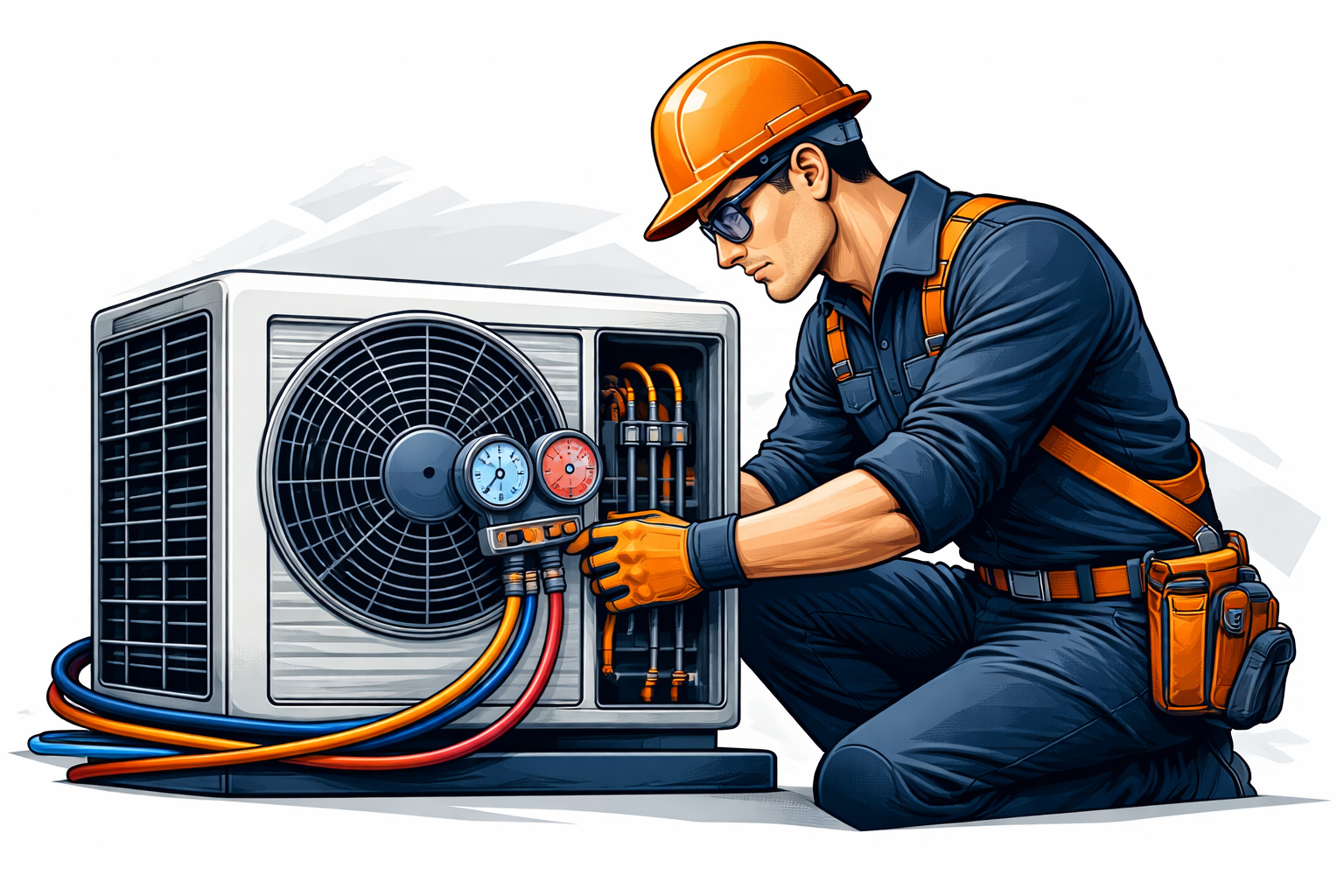
HVAC is one of the fastest growing trades in America. The BLS projects 11 percent job growth through 2035 with approximately 40,600 job openings per year. Every building with climate control needs HVAC technicians to install, maintain, and repair the systems. And as buildings get more energy efficient and systems get more complex, the demand for skilled techs keeps increasing.
The national median salary is $61,010 per year according to BLS May 2025 data. The barrier to entry is lower than some trades because you can start working with just an EPA 608 certification and basic training in under a year. This guide covers every step.
What HVAC Technicians Actually Do
HVAC stands for Heating, Ventilation, and Air Conditioning. Technicians install, maintain, diagnose, and repair systems that control temperature, humidity, and air quality in residential and commercial buildings. The work includes furnaces, air conditioners, heat pumps, boilers, ductwork, thermostats, refrigeration systems, and increasingly, smart building controls.
The job is physical and varied. You will work on rooftops, in crawl spaces, and in attics. Summer means working in hot attics diagnosing AC systems. Winter means working outside on heating units. The upside is that the work changes constantly. Residential service techs go to different homes every day solving different problems. Commercial techs work on larger, more complex systems.
Modern HVAC is getting more technical every year. Variable refrigerant flow (VRF) systems, heat pump technology, building automation systems, and indoor air quality controls require real diagnostic skills. The days of "just add refrigerant" are over. Today's HVAC tech needs to understand electrical circuits, refrigerant chemistry, airflow dynamics, and computerized controls.
Step 1: Get Your EPA 608 Certification
This is the one certification required by federal law. The EPA Section 608 certification is mandatory for anyone who handles refrigerants. There are four levels:
- Type I: Small appliances (window units, refrigerators)
- Type II: High-pressure systems (most residential and commercial AC)
- Type III: Low-pressure systems (chillers)
- Universal: All of the above (this is what you want)
The exam typically costs $25 to $150 depending on the testing provider. Study materials are available free online. The certification does not expire. Get your Universal EPA 608 before you do anything else. It shows employers you are serious and legally allowed to handle refrigerants.
Step 2: Get Trained
Trade school or community college (6 to 24 months). This is the most common entry path. Programs cover electrical fundamentals, refrigeration theory, heating systems, air distribution, controls, and hands-on lab work. Costs range from $1,500 at a community college to $15,000 or more at a private trade school. Many community college programs qualify for federal financial aid.
Apprenticeship (3 to 5 years). UA (United Association) and SMART (Sheet Metal, Air, Rail, and Transportation Workers) unions offer HVAC apprenticeships. You earn wages while learning. The training covers residential and commercial systems. Union apprenticeships are typically free or low cost.
Employer training. Some HVAC companies hire entry-level helpers and train them on the job. You start as a helper or installer, learn from experienced techs, and work your way up to service technician. This path takes longer but costs nothing and you earn wages from day one.
Step 3: Get Licensed (If Your State Requires It)
HVAC licensing varies widely by state. This is one of the biggest differences between HVAC and other trades like electrical or plumbing.
- States WITH statewide HVAC licensing: Texas, California, Florida, Georgia, North Carolina (among others). These states require a license to perform HVAC work independently.
- States with NO state-level HVAC license: Colorado, Illinois, Indiana, Kansas, Maine, Massachusetts, Minnesota, Missouri, New Hampshire, New York, Pennsylvania, South Dakota, Vermont, Wisconsin. In these states, local jurisdictions may have their own requirements. Note that Ohio and Michigan do require state-level contractor licenses for HVAC work.
- Universal requirement: EPA 608 is required everywhere. That is federal, not state.
If your state requires a license, the process typically involves documenting your experience hours, passing a written exam, and paying a fee. Requirements range from 2 to 4 years of experience depending on the state.
Step 4: Consider Additional Certifications
NATE certification. North American Technician Excellence (NATE) certification is the industry's most recognized voluntary credential. It tests real-world HVAC knowledge across installation and service. Many employers prefer or require NATE certification. It can increase your earning potential by $2 to $5 per hour.
Manufacturer certifications. Carrier, Trane, Lennox, and other manufacturers offer training programs that certify you on their specific equipment. These are valuable for service techs because they demonstrate expertise on the brands you will encounter most often.
What You Will Earn
The national median salary for HVAC mechanics and installers is $61,010 per year according to BLS May 2025 data. Pay varies significantly by location, experience, and specialization. The highest paying states and metro areas push well above $70,000 for experienced techs. Commercial and industrial HVAC specialists earn more than residential techs. HVAC business owners can earn six figures.
HVAC has strong seasonal demand patterns. Summer and winter are the busiest seasons (AC and heating). Many techs earn significant overtime during peak seasons, which can add 20% to 30% to their annual income.
Why HVAC Is a Strong Career Choice
Climate control is not optional. As temperatures get more extreme and buildings get more energy efficient, the systems that manage indoor comfort are getting more complex and more critical. The 11 percent job growth projection through 2035 reflects this increasing demand.
HVAC also offers a clear path to business ownership. A licensed HVAC tech with a van, tools, and a good reputation can build a service business with strong recurring revenue. Maintenance contracts provide steady income year-round, and emergency service calls (no heat in January, no AC in July) command premium pricing.
The diagnostic skills in HVAC transfer to other technical careers too. If you are interested in automotive diagnostics, the electrical and refrigerant knowledge you build in HVAC applies directly. APEX Tech Nation covers the automotive side of diagnostics with free training for working technicians.
Interested in Automotive?
APEX Tech Nation is the go-to platform for automotive technicians. Free AI diagnostics, training, ASE prep, and a community of working techs. Built by Anthony Calhoun.
Visit APEX Tech Nation