
How to Become a Plumber in 2026
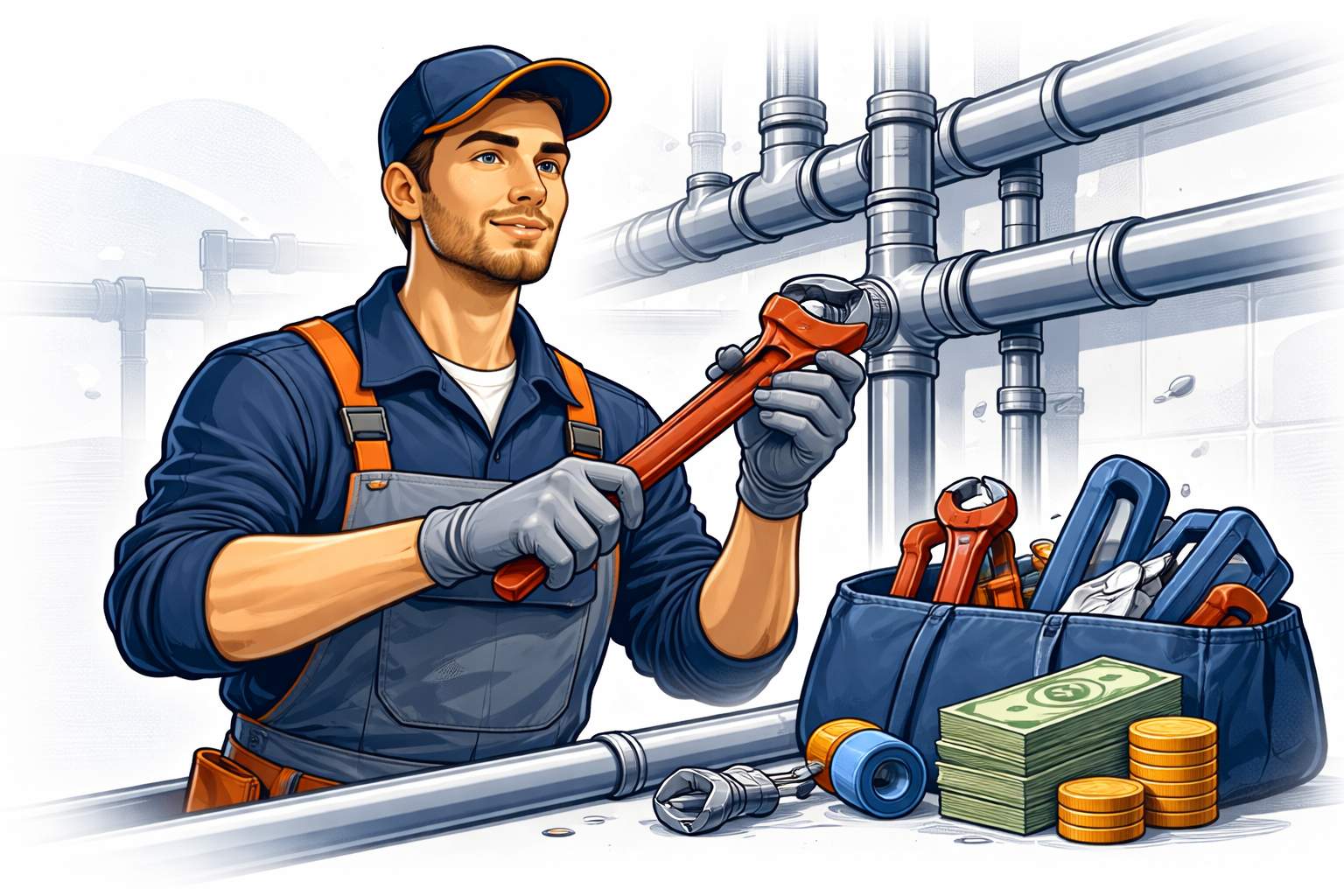
Plumbing is one of the most stable and highest paying trades in America. The national median salary is $63,800 per year according to BLS May 2025 data, and the BLS projects approximately 42,000 job openings per year through 2035. Every building needs plumbing. Every homeowner eventually calls a plumber. The work is not going anywhere.
This guide covers the full path from zero experience to licensed plumber, including what the work is actually like, how to get trained, what licensing looks like, and what you can expect to earn.
What Plumbers Actually Do
Plumbers install, repair, and maintain water supply lines, drainage systems, gas lines, and fixtures in residential, commercial, and industrial settings. The work includes reading blueprints, cutting and fitting pipe, soldering and brazing, testing systems for leaks, and troubleshooting drain problems.
The job is physical. You will work in crawl spaces, dig trenches, carry heavy pipe, and spend time in positions that are not comfortable. It can also be unpleasant. Sewer lines and drain work are part of the job. But the upside is that the work is varied. No two days are the same, especially in service plumbing where you go to different locations and solve different problems.
Plumbing is also more technical than most people realize. Modern plumbing involves PEX systems, tankless water heaters, recirculation pumps, gas appliance venting calculations, and code compliance that varies by jurisdiction. The trade requires real problem-solving skills.
Step 1: Get Your High School Diploma or GED
Every apprenticeship program requires at least a high school diploma or GED. Math is important in plumbing. You will calculate pipe grades (slope for drainage), measure and cut accurately, and read technical drawings. Physics helps too, since plumbing is fundamentally about fluid dynamics, pressure, and gravity.
Step 2: Choose Your Training Path
Union apprenticeship (UA). The United Association of Journeymen and Apprentices of the Plumbing and Pipefitting Industry (UA) runs apprenticeship programs through local unions across the country. These are typically 5 years of paid training. The UA covers tuition. You earn wages from day one, starting at about 40% to 50% of journeyman scale and increasing every 6 months. Competition for UA apprenticeship spots varies by local. Some areas are easier to get into than others.
Non-union apprenticeship. The Plumbing-Heating-Cooling Contractors Association (PHCC) and Associated Builders and Contractors (ABC) also offer apprenticeship programs. These are typically 4 years. You work for a plumbing contractor who sponsors you, and you attend classes on nights or weekends. Some charge tuition, others are employer-paid.
Trade school first. Community colleges and trade schools offer plumbing certificate or associate degree programs (6 to 24 months). These give you classroom knowledge and basic hands-on skills before entering an apprenticeship. The advantage is that you enter the apprenticeship with some knowledge already. The disadvantage is that you are paying tuition and not earning journeyman-level wages during that time.
Step 3: Complete Your Apprenticeship
The apprenticeship is where you learn the trade. You work alongside licensed plumbers on real jobs while attending classroom instruction. Typical curriculum includes the International Plumbing Code (IPC) or Uniform Plumbing Code (UPC) depending on your region, blueprint reading, pipe fitting and joining methods, drainage system design, gas piping, water heater installation, and safety.
Most states require approximately 8,000 hours of supervised on-the-job training. Some states require more. Your pay increases at regular intervals throughout the apprenticeship.
Step 4: Get Licensed
Plumbing licensing varies significantly by state. Here are the key differences:
- Most states: Require 4 to 5 years of apprenticeship before the journeyman exam.
- Alabama and Tennessee: Among the shortest paths, with some limited licenses available with less experience.
- NYC: Requires 7 years for a master plumber license, one of the longest in the nation.
- California: Licenses at the contractor level only (C-36 Plumbing). There is no separate journeyman or master designation at the state level.
- Code basis: Most states use the International Plumbing Code (IPC). Western states generally use the Uniform Plumbing Code (UPC).
Step 5: Build Your Career
After earning your journeyman license, your options include:
- Master plumber. Requires 1 to 3 additional years as a journeyman in most states, then a master plumber exam. Master plumbers can pull permits and run jobs.
- Start your own business. Plumbing is one of the best trades for self-employment. A master plumber with a truck, tools, and a good reputation can build a very profitable business. Service plumbing (residential repairs and installations) has high margins and steady demand.
- Specialize. Medical gas piping, fire sprinkler systems, industrial process piping, and green plumbing (rainwater harvesting, greywater systems) are specialty areas that command premium rates.
- Commercial and industrial. Large-scale projects pay well and offer steady work, especially through union contractors.
What You Will Earn
The national median salary for plumbers, pipefitters, and steamfitters is $63,800 per year according to BLS May 2025 data. The highest paying states include Illinois, Oregon, and New York, where experienced plumbers earn well above $80,000. Master plumbers who own their own shops routinely earn six figures.
Plumbing consistently ranks among the highest paying trades because the licensing barrier limits the supply of qualified plumbers while demand stays steady. Everyone needs working plumbing, and the consequences of bad plumbing (water damage, gas leaks, sewer backups) mean customers are willing to pay for quality work.
Why Plumbing Is a Strong Career Choice
Plumbing cannot be outsourced or automated. A robot is not going to crawl under your house and replace a sewer line. The work requires human judgment, problem-solving skills, and physical presence at the job site. That makes it one of the most recession-resistant careers you can choose.
The BLS projects 42,000 job openings per year through 2035. The average age of a working plumber is rising, which means retirements are creating opportunities faster than new plumbers are entering the trade. If you get licensed now, you are entering a field with strong demand and limited competition for decades to come.
If you are considering a career in the automotive trades instead, APEX Tech Nation has a complete guide on becoming an automotive technician, including ASE certification and what to expect on the shop floor.
Interested in Automotive?
APEX Tech Nation is the go-to platform for automotive technicians. Free AI diagnostics, training, ASE prep, and a community of working techs. Built by Anthony Calhoun.
Visit APEX Tech Nation