
How to Become an Automotive Technician in 2026
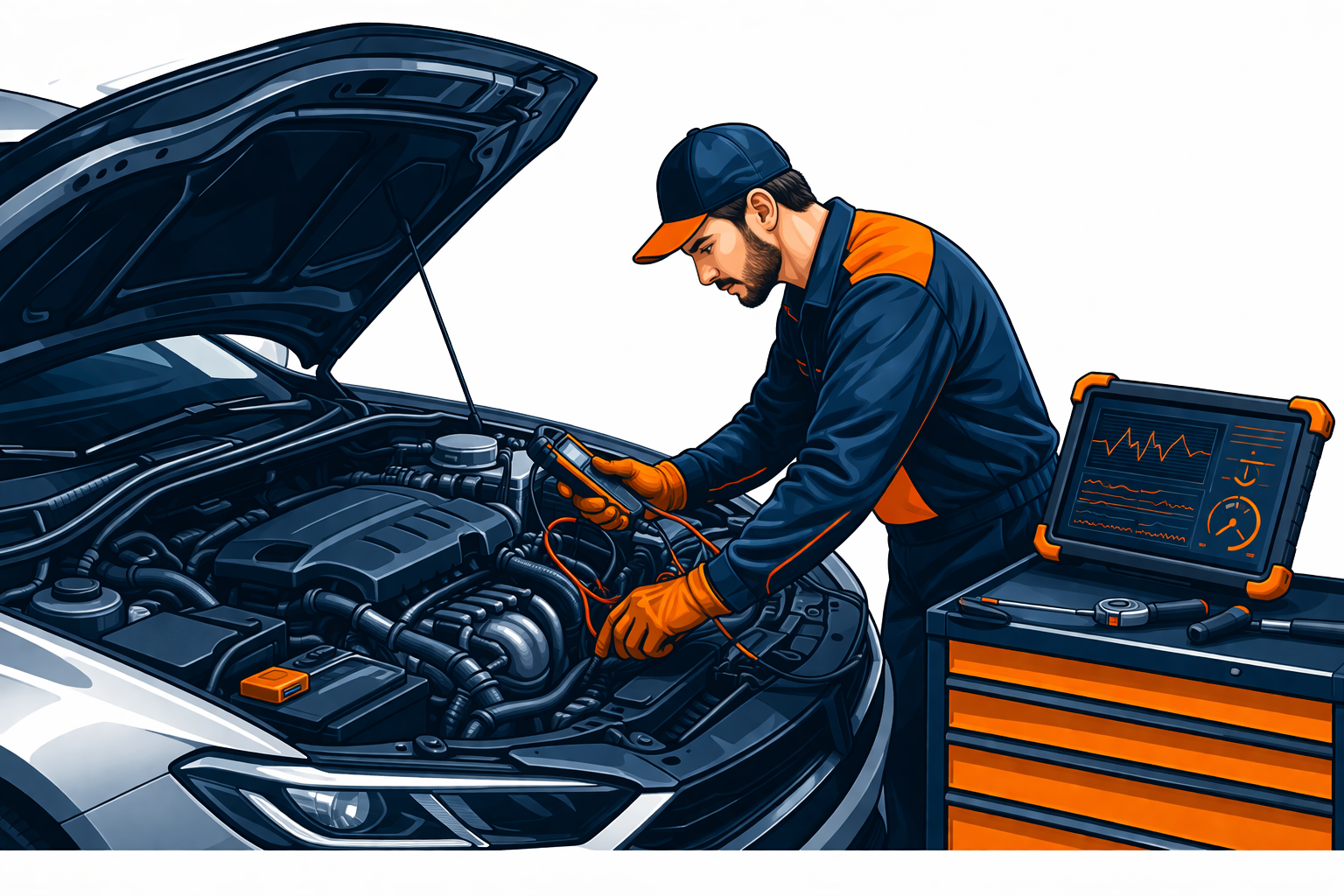
Automotive technology is one of the most accessible trades to enter. You do not need a license from the state. You do not need a 4-year apprenticeship before you can touch a car. You can walk into a shop tomorrow as a lube tech and start learning. That low barrier to entry is both the strength and the weakness of the career. It is easy to get in, but getting to the top requires real skill, continuous learning, and a commitment to staying current as vehicles get more complex.
The national median salary is $50,620 per year according to BLS May 2025 data. That number is lower than electricians ($63,190) and plumbers ($63,800) because it includes every tech at every level, from the kid doing oil changes to the master tech diagnosing hybrid systems. The top of the pay scale in this trade is very good. The bottom is not. Where you end up depends on how seriously you take your development.
What Automotive Technicians Actually Do
Automotive technicians diagnose, repair, and maintain vehicles. The work ranges from basic maintenance (oil changes, brakes, tires) to complex diagnostics (electrical faults, engine performance, transmission problems, ADAS calibration). Modern vehicles are rolling computers. A technician today needs to understand mechanical systems, electrical circuits, computer networks, and software. The days of being "just a mechanic" are over.
The job is physical. You stand all day, work in uncomfortable positions, deal with heat and cold, and handle chemicals. It can also be mentally demanding, especially on the diagnostic side where you are troubleshooting systems with hundreds of components and thousands of possible failure points.
Step 1: Get Your Foot in the Door
There are several entry paths:
Start as a lube tech or tire tech. Many shops hire entry-level techs with no experience for oil changes, tire rotations, and basic inspections. The pay is low ($12 to $16 per hour) but you learn the basics, get familiar with shop culture, and start building experience. This is the "earn while you learn" path.
Automotive technology program (1 to 2 years). Community colleges and trade schools offer automotive technology programs that cover engine repair, electrical systems, brakes, suspension, HVAC, and diagnostics. Costs range from $3,000 at a community college to $30,000 or more at a private school. Programs accredited by the ASE Education Foundation are the most respected by employers. GM ASEP, Ford ASSET, Toyota T-TEN, and Honda PACT are manufacturer-sponsored programs that combine classroom work with dealership experience.
Military automotive training. The military trains automotive and diesel mechanics extensively. If you served in a mechanical MOS, your skills transfer directly to civilian auto repair. Many dealerships actively recruit veterans with military automotive experience.
Step 2: Get ASE Certified
ASE (Automotive Service Excellence) certification is the industry standard. It is not legally required, but most dealerships and quality independent shops expect it. There are 8 automotive tests:
- A1: Engine Repair
- A2: Automatic Transmission/Transaxle
- A3: Manual Drive Train and Axles
- A4: Suspension and Steering
- A5: Brakes
- A6: Electrical/Electronic Systems
- A7: Heating and Air Conditioning
- A8: Engine Performance
Each test requires 2 years of relevant work experience before you can register (1 year with a qualifying education program). Passing all 8 earns you ASE Master Technician status. Each certification is valid for 5 years and must be renewed.
APEX Tech Nation offers free ASE mock exams for all 8 tests, AI-generated practice questions, and an AI tutor that adapts to what you need to study. It is the best free ASE prep resource available, built by a 25-year ASE Master Tech who still turns wrenches.
Step 3: Understand Flat Rate vs. Hourly
Most dealership technicians are paid on flat rate, which means you are paid based on the number of hours you "flag" (complete), not the number of hours you are physically in the shop. If a brake job pays 1.5 hours and you finish it in 45 minutes, you get paid for 1.5 hours. If it takes you 3 hours, you still only get paid for 1.5.
Flat rate rewards speed and efficiency. Fast, skilled techs can flag 50 to 60 hours in a 40-hour week. Slow techs or techs waiting for work can flag 25 hours and take home a paycheck that does not cover their bills. This pay structure is one of the biggest sources of stress and frustration in the trade, and it is something you need to understand before you commit to a dealership career.
Independent shops are more likely to pay hourly or salary. The base rate is often lower than what a productive flat rate tech earns, but the income is more predictable.
For more on flat rate strategy and how to make the most of it, APEX Tech Nation breaks down flat rate vs. hourly with real numbers from working techs.
Step 4: Keep Learning
Vehicles change faster than any other product technicians work on. A tech who stops learning becomes obsolete within 5 years. EVs, hybrids, ADAS (Advanced Driver Assistance Systems), over-the-air software updates, and connected vehicle technology are changing every aspect of the job.
The techs who earn the most are the ones who stay current. Manufacturer training, ASE recertification, and independent study are all part of the career. APEX Tech Nation has over 430 free training guides covering everything from basic electrical theory to advanced diagnostics, written by a working ASE Master Technician.
What You Will Earn
The national median salary is $50,620 per year according to BLS May 2025 data. But that number hides a massive range. Entry-level lube techs earn $28,000 to $35,000. Experienced B-level techs earn $45,000 to $60,000. Master techs and diagnostic specialists at busy dealerships earn $75,000 to $100,000 or more. The top flat rate producers at high-volume stores can exceed $120,000.
The biggest factors in your earning potential are your skill level, your certifications, and the shop you work in. A highly skilled tech at a dead shop earns less than an average tech at a busy shop. Location matters too. Dealerships in high cost-of-living areas pay more because they have to.
Is It Worth It?
Honest answer: it depends on how far you take it. If you stay at the lube rack doing oil changes for 10 years, you will not earn a living wage. If you invest in your skills, get ASE certified, learn diagnostics, and position yourself at a good shop, you can earn a solid middle-class income without college debt.
The trade has real downsides. Flat rate stress, physical wear on your body, tool investment ($30,000 to $50,000 or more over a career), and the constant pressure to stay current with technology. Those are real costs that every honest tech will tell you about.
But for people who like solving problems, working with their hands, and never doing the same thing twice, it is a career that can provide for a family and keep you challenged for decades. The technician shortage means good techs have leverage right now. Shops are competing for talent. Use that leverage to find a shop that invests in you, pays you fairly, and respects your time.
Already Working as a Tech?
APEX Tech Nation has free AI diagnostics, 400+ technical training articles, ASE practice tests, and a weekly industry report. Built by a 25-year ASE Master Tech.